Sibling to Tyler, Katie and Faith, NPC

Our first interview is with Serina Heinze, age 20, who lost her older brother Tyler and younger sisters Katie and Faith to NPC. We spoke with Serina over the NNPDF Conference weekend. Serina is an inspiration within the Niemann-Pick community and leader within our Unaffected Siblings Group.
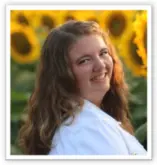
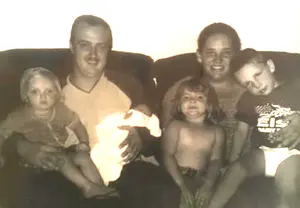
So, just a little background, I had three siblings who were diagnosed with Niemann-Pick. My parents were actually the ones who ended up picking up on it with my older brother, so I didn’t really see it because, my brother was around one or two when they started noticing some things going on, they were like “Some of his activities, he’s not progressing like most other kids his age.” And that was before I was even born. My parents noticed it, I was born, and then both of my younger sisters were born, and then they finally ended up getting a diagnosis when my youngest sister was a baby. So, I didn’t really get to pick up on that, since I was only four.
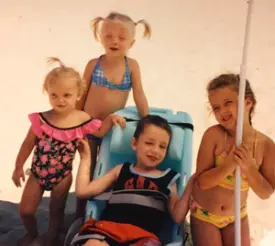
I think my parents were very open about letting us kids—my younger sisters, my brother—just letting all of us know what was going on. They didn’t want us to be in the dark about anything. And, of course, a lot of the things they were explaining to us were dumbed-down, so instead of saying “Your siblings have an enlarged spleen, and a neurological this-and-that” and all those big words, they’d say like “Hey, your siblings can’t really do the things that you can do anymore. Being able to walk is going to get harder for them sometimes, or they’re not going to be able to dance with you anymore.” So kind of dumbed down, but my parents really explained that all to me. It’s something big in our life, it is probably the biggest thing in our lives, and to be able to advocate for Niemann-Pick, and knowing what it is and sharing it with others [is really important.]
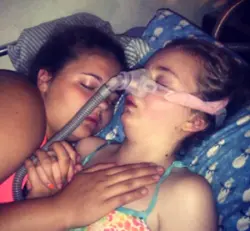
For the most part I relied on the firsthand experience and just hearing what my parents had to say, especially because we have been so involved with the foundation for so long. At times I would do my own research, if I had heard of some new thing, or just if I didn’t know what something means. Especially as I’ve gotten older, and going off to college, I guess since I’m not with my parents as much, so it’s not as easy to just ask them “Hey, what does this mean?” So, I will take some time to search some stuff. But for the most part it has been my own experience and watching it firsthand from watching my siblings and watching other kids who have it as well.
It’s hard to find sources outside of what the foundation gives, I think that every time you type in ‘Niemann-Pick disease’ the foundation website comes right up. I’ll look through the newsletters, I think I get that through email all the time, so I’m getting that information, but trying to find information outside of the foundation, it is a little bit harder. For the most part everything I get is through the foundation.
So, I have this little spiel, basically, that’s just planned for everyone. So, I basically just start off, I say it’s kind of like Alzheimer’s for children. You start off growing, and then you get to a certain point and kind of start just going backwards in all of your abilities. So, my siblings were able to run, dance, play basketball, do that type of stuff with me, and then there became a point where they started to lose the ability to walk, the ability to swallow, the ability to do those extra things. And then I’m always open for more questions, we’ve just always been so open about it.
The first conference that I went to, there was a sibling meeting like there is now, but a couple years after that there weren’t any, and that first meeting wasn’t so “hey, we are all siblings, let’s talk about it,” it was more just the siblings and the parent that you wanted to bring and then there’s a social worker there, and it was very high stress. I wish there were more resources for the siblings. I know that we do have the sibling group now, but most of the time, for the most part we just talk at the conference, we don’t stay connected afterwards, so I think it would be really cool if there were some resources where we could stay connected longer. And, it could just be on us siblings that we’re not taking the initiative to message each other, and we do talk to each other every so often, but I think just having a resource for people coming in who have no idea what this is or what is going on with their sibling, just having something available for them to understand it. I don’t know what exactly that would be, but just something to help younger people.
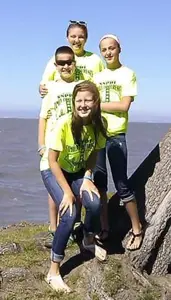
I think the group is really useful, we’re making connections, I’ve met a couple other siblings who I have randomly called up, they have randomly called me when they’re having a rough day, or are just like “I don’t understand this, how did you get through this in the past,” or “are you going through this now, can I lean on you,” and just how can we support each other type of thing. And I think that that has been one of my favorite parts about the sibling group, and being able to find those similarities in our stories. Not a lot of people have gone through what we go through, like I have lost all three of my siblings to Niemann-Pick, and not a lot of people understand that and the heaviness that comes with that. Being able to connect with people who understand the loss of a sibling, but also what came with the disease, being able to have both sides to those stories and being able to connect with them is definitely one of my favorite parts of having the sibling group.
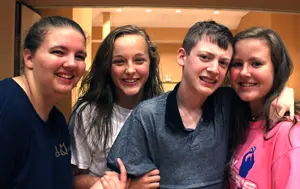
It doesn’t directly affect me with the physical labor anymore, but it’s something that I think about every single day, because I am a carrier of the gene so I could pass it on to my children. It’s something that I lived with and I think about my siblings every day, so it’s definitely something that is always on my mind. It doesn’t necessarily mean it’s a bad thing, it doesn’t really bring me down. It’s nice to understand the community that we have within Niemann-Pick, a lot of these people I’m so excited to see every year. I wouldn’t know them if it wasn’t for Niemann-Pick, and I do think about a lot of people that I know. I have them on my Facebook and I have them on my Instagram so getting to see them every day, that definitely affects my everyday life. Being able to see the other kids smiling makes my day happier, and being able to pray for those that aren’t really having the greatest of times. So just being able to keep up to date with what’s going on within the community day-to-day is very helpful and I love it.
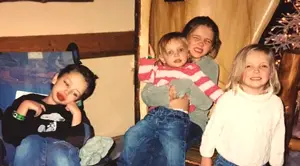
I would say reach out. We have the sibling group, and I guarantee every one of the siblings in that group would be more than happy to connect with you and to help you with understanding what’s going on. Because sometimes the things that you’re living through are different than what your parents are living through and what your sibling is living through, and we all have our own stories, but you can mostly relate to someone who is a sibling as well. So just reach out, find those resources. Try to live every day to its fullest, that’s something that we lived by with my siblings, just always finding the good parts of every day, no matter how hard it may be. Living in the shadow of your sibling, because that does tend to happen and medical needs do come first at times, so just finding the bright side of everything.
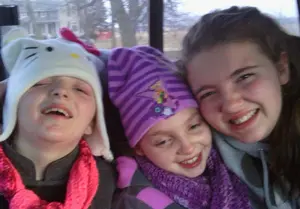
For more information on the Unaffected Siblings Group contact Family Services Manager, Laurie Turner at [email protected].
Become an NNPDF member for the latest research updates, event invitations, and a direct line to the community.