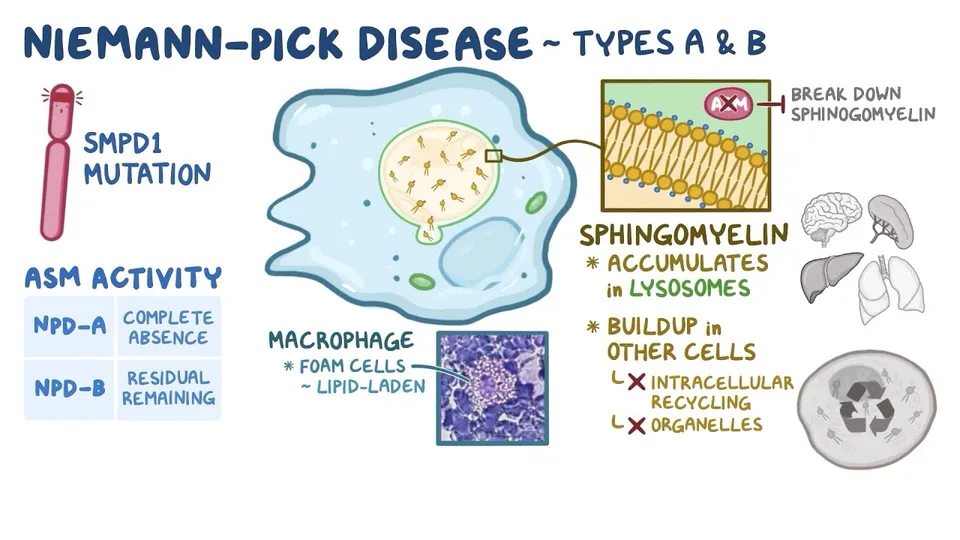
ASMD happens when the body can’t clear a fat called sphingomyelin. How much it affects someone and when depends on where they fall on the spectrum.
1,200 known cases worldwide | FDA-approved treatment available | Gene: SMPD1
ASMD stands for Acid Sphingomyelinase Deficiency, the current name for what used to be called Niemann-Pick Disease Type A and B. Without enough of the acid sphingomyelinase enzyme, a fatty substance called sphingomyelin builds up inside cells, especially in the liver, spleen, lungs and sometimes, the brain.
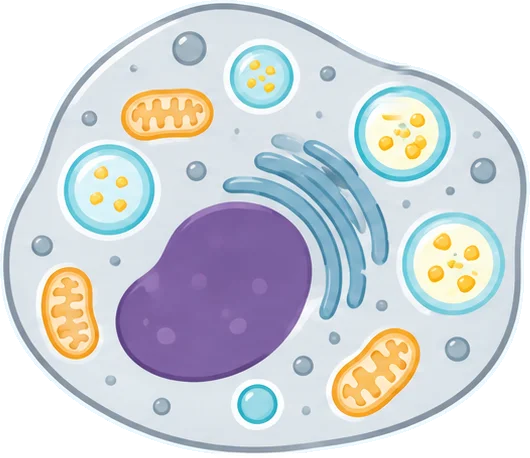
Acid sphingomyelinase is an enzyme that helps break down a fat called sphingomyelin inside tiny compartments in the cell called lysosomes.
Acid sphingomyelinase is working normally, so sphingomyelin is broken down inside lysosomes and the cell stays healthy.
Lysosomes break down sphingomyelin into smaller pieces
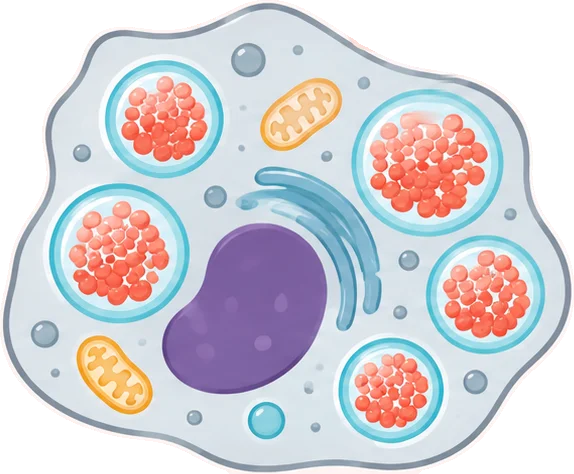
When acid sphingomyelinase is missing or not working well, sphingomyelin cannot be broken down and builds up inside lysosomes.
Sphingomyelin builds up in lysosomes due to low or absent acid sphingomyelinase activity
A building block of the body
Holds the cell’s genetic information
Helps provide energy for the cell
Help the cell function
A compartment where acid sphingomyelinase works
A type of fat
Smaller pieces that can be used by the cell
Identifying where a patient is on the spectrum is complex and can be challenging to determine in the first several years of life in some patients. Where someone falls affects what to expect and how it’s managed.
More severe
Milder
(old names)
(new names)
Infantile neurovisceral
Affects the brain as well as the body. Symptoms begin in infancy. The most severe form on the spectrum. Often little to no detectable enzyme.
Chronic neurovisceral
Falls between the two extremes, affecting both the internal organs and nervous system. The presence and severity of some neurologic symptoms can be difficult to discern in the first few years of life.
Chronic visceral
Mainly affects the internal organs — especially the liver, spleen, and lungs — with little to no effect on the brain. Age of onset can vary between early in life and adulthood. Many live into adulthood.
No single sign or symptom confirms it — but if several sound familiar, it’s worth a conversation with a doctor.
Genetic testing confirms the diagnosis and identifies the specific SMPD1 gene change involved, which also helps identify carriers in the family.
Diagnosis is based on measuring acid sphingomyelinase enzyme activity in white blood cells. The test reliably identifies ASMD (not type A and B) but does not distinguish subtypes or identify ASMD carriers.
Molecular testing is commercially available.
An FDA-approved enzyme replacement therapy, Xenpozyme® (olipudase alfa), is now available for the non-neurological effects of ASMD.
Financial assistance is available for prescriptions, premiums, therapy administration, and travel to treatment.
See and hear about the science behind NPD and from those who have experienced it.
who’s been exactly here.
NNPDF’s ASMD community includes families across every point on the spectrum, from newly diagnosed to adults living well with Type B.