Niemann-Pick disease may be rare, but you’re not alone. Find trusted information, practical resources, and a supportive community to help you navigate what comes next.
Start here for clear, compassionate guidance on what the diagnosis means and what to do next.
Understand Niemann-Pick disease, its types, symptoms, treatment, and the terminology you may encounter.
Find resources, connections, and support for patients, families, and caregivers.
Niemann-Pick diseases are in a group of lysosomal storage disorders that affect metabolism and are caused by genetic mutations. The most commonly recognized forms of Niemann-Pick are Acid Sphingomyelinase Deficiency types A and B (ASMD) and Niemann-Pick disease, type C (NPC). The National Niemann-Pick Disease Foundation (NNPDF) provides support services for individuals and families affected by ASMD and Niemann-Pick type C, and supports and promotes research to find treatments and a cure for all types of Niemann-Pick disease.
Niemann-Pick disease is a group of rare, inherited conditions that affect how the body processes and transports certain fats, or lipids, within cells. When these substances aren’t processed properly, they can build up in different organs and tissues—including the brain, liver, spleen, and lungs.
The symptoms, age of onset, and progression can vary widely depending on the type of Niemann-Pick disease. Understanding the specific type is an important first step in knowing what to expect and finding the right care and support.
ASMD and Niemann-Pick disease, type C (NPC) are distinct conditions caused by different genetic changes and affecting the body in different ways.
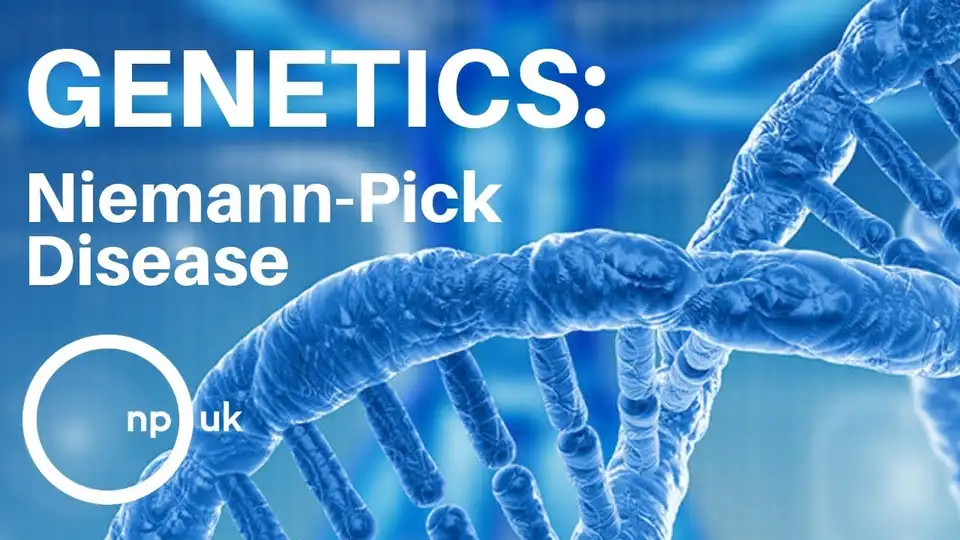
Both forms, ASMD and NPC, are genetic. Understanding how these disorders are inherited can help families make sense of a diagnosis and consider genetic counseling or testing.
Families don’t have to navigate Niemann-Pick disease alone—information, community, advocacy, and practical support are available through patient organizations and care teams.
Niemann-Pick disease isn’t a single condition. Acid Sphingomyelinase Deficiency (ASMD) and Niemann-Pick disease type C (NPC) have different causes, symptoms, progression, and treatment options.
Knowing which type you or your family member has makes a difference—because the information, care, and resources you need depend on the diagnosis.
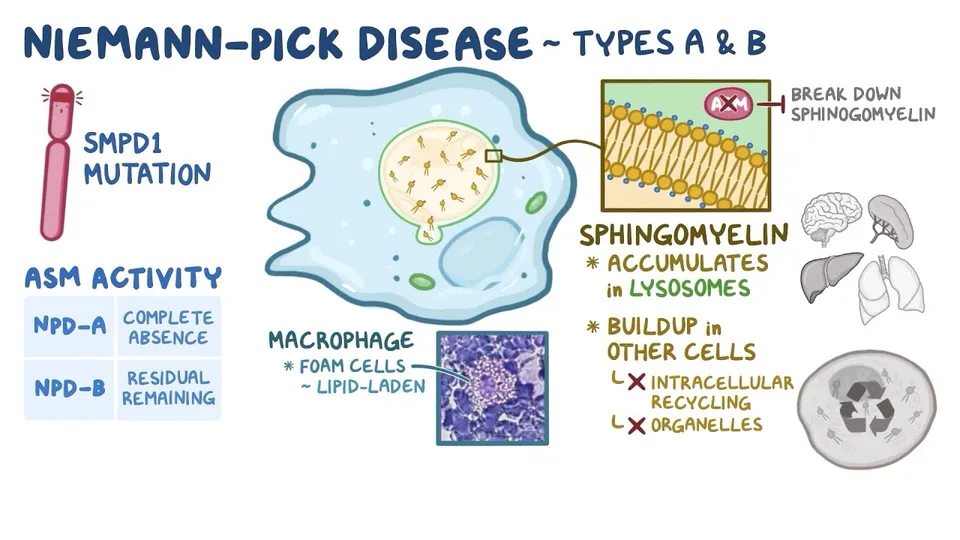
ASMD is caused by changes in the SMPD1 gene that lead to reduced activity of an enzyme called acid sphingomyelinase. As a result, a fatty substance called sphingomyelin builds up inside cells—particularly in organs such as the liver, spleen, and lungs.
ASMD exists along a spectrum. Symptom onset may begin in infancy and progress rapidly, while others may develop symptoms later and progress more slowly.
Includes historically named Types A, A/B, and B
Symptoms and severity can vary significantly
Treatment and supportive care options depend on the individual
NPC is a different genetic condition that affects the way cholesterol and other lipids move within cells. These substances become trapped inside cells, which can progressively affect the brain and other parts of the body.
NPC can begin at almost any age. Symptom onset may begin at infancy, adolescence, or adulthood, and symptoms can look very different from one person to another.
Caused by changes in either the NPC1 or NPC2 gene
Can affect neurological function as well as other organs
Age of symptom onset and progression vary widely
Your diagnosis or genetic test results may identify SMPD1, NPC1, or NPC2. Your healthcare team or a genetic counselor can help confirm your specific diagnosis and what it means for your family.
ASMD and NPC can affect many parts of the body, and symptoms can vary depending on the type, age of symptom onset, and person.
No single symptom confirms ASMD or NPC. But when several of these signs appear together, especially alongside a family history, it may be worth talking with a doctor about further evaluation.
Enlarged liver or spleen—Swelling or enlargement of the abdomen may be an early sign.
Jaundice shortly after birth—Yellowing of the skin or eyes that persists or is more significant than expected.
Shortness of breath or repeated lung infections—Some forms can affect the lungs and make breathing more difficult.
Trouble moving the eyes up and down—Difficulty with vertical eye movements can be an important clue.
Loss of motor skills already learned—A child or adult may begin having difficulty with movements or abilities they could previously perform.
Feeding or swallowing difficulties—Eating, drinking, or swallowing may become harder over time.
Learning or developmental difficulties—Development may be delayed, or learning and cognitive abilities may change.
Slurred speech, seizures, or “cataplexy” (loss of muscle tone)—Neurological symptoms can emerge or progress differently from person to person.
Unusual sensitivity to touch or sudden loss of muscle tone—Some people with NPC experience sudden episodes of muscle weakness or loss of muscle tone, sometimes triggered by strong emotions such as laughter.
Many of these symptoms can have other, more common causes—having one does not mean someone has Niemann-Pick disease. But if several signs occur together, symptoms are unexplained or progressive, or Niemann-Pick disease runs in your family, talk with a healthcare professional about whether further evaluation or genetic testing may be appropriate.
Niemann-Pick type C and ASMD can affect families of any background and in any part of the world. Because it is inherited, certain genetic variants are more common in some populations and geographic regions.
Ashkenazi Jewish families
Certain ASMD variants have been identified more frequently among people of Ashkenazi Jewish ancestry.
French Canadian families of Nova Scotia
A particular NPC variant has historically been found at a higher frequency in some French Canadian families from Nova Scotia.
Tunisia, Morocco & Algeria
Some ASMD variants have been reported more frequently in families with North African ancestry, including communities in Tunisia, Morocco, and Algeria.
Southern New Mexico & Colorado
A higher occurrence of NPC has been identified in certain families with roots in this region of the southwestern United States.
IMPORTANT: Ancestry alone cannot tell you whether you or a family member has Niemann-Pick disease—and the condition is not limited to these communities. Genetic testing and consultation with a qualified healthcare professional can help determine whether a specific inherited variant is present.
Niemann-Pick disease is inherited in an autosomal recessive pattern. This means a child must inherit a changed copy of the same disease-related gene from both parents to be affected.
Parents who carry one changed copy are called carriers. Carriers do not develop signs or symptoms of Niemann-Pick disease. Many people don’t know they are carriers until someone in the family is diagnosed or genetic testing is performed.
With each pregnancy, the chances are the same
When both parents are carriers, every pregnancy has:
The child inherits neither changed copy and is not affected and not a carrier.
The child inherits one changed copy and is a carrier, like the parents.
The child inherits both changed copies and has the disease.
These chances apply independently to every pregnancy—previous pregnancies do not change the odds for the next child.
If Niemann-Pick disease has been diagnosed in your family, genetic testing can help identify the specific gene changes involved and determine whether other family members may be carriers. A genetic counselor can also help explain test results, inheritance, and what they may mean for current or future family members.
See and hear about the science behind NPD and from those who have experienced it.
Dr. Marc Patterson, a pediatric neurologist at Mayo Clinic, talks about Niemann-Pick disease type C (NPC).
Video from Mayo Clinic · 10 min
who’s been exactly here.
Whatever the diagnosis, you don’t have to face it alone. NNPDF’s community includes families at every stage, from newly diagnosed to adults living with Niemann-Pick disease.
Become an NNPDF member for the latest research updates, event invitations, and a direct line to the community.